Let’s be real – you know exactly what this blog post is about.
I’ve been writing about these cursed plastic objects for years now. After doing an overview of the worst iterations of animal skeleton decorations in 2017, an investigation as to why they look as horribly and inaccurately as they do in 2021, and more recently, an deep exploration as to why people seem to love them so much in 2024, I figured there can’t possibly be anything more I can add to this cursed conversation.
But the conversation doesn’t seem to be done with me! Judging by the state of my personal messages and online comments since the end of September, people have found what feels like thousands of new horrific skeletal décor that apparently demands to be addressed.
So fine! You all win! The Bad Plastic Skeleton Wars will continue, and this year we will go back to basics – let’s take a look at what sorts of horrors persist within your local Spirit Halloween (or similar).
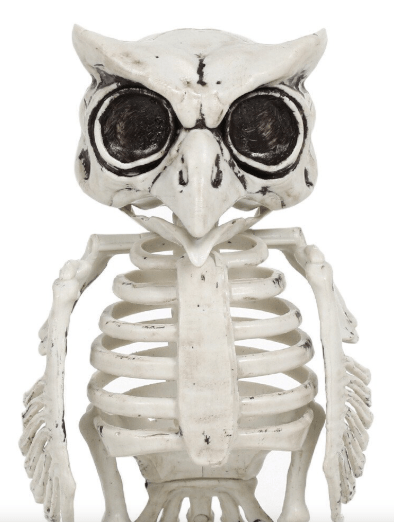
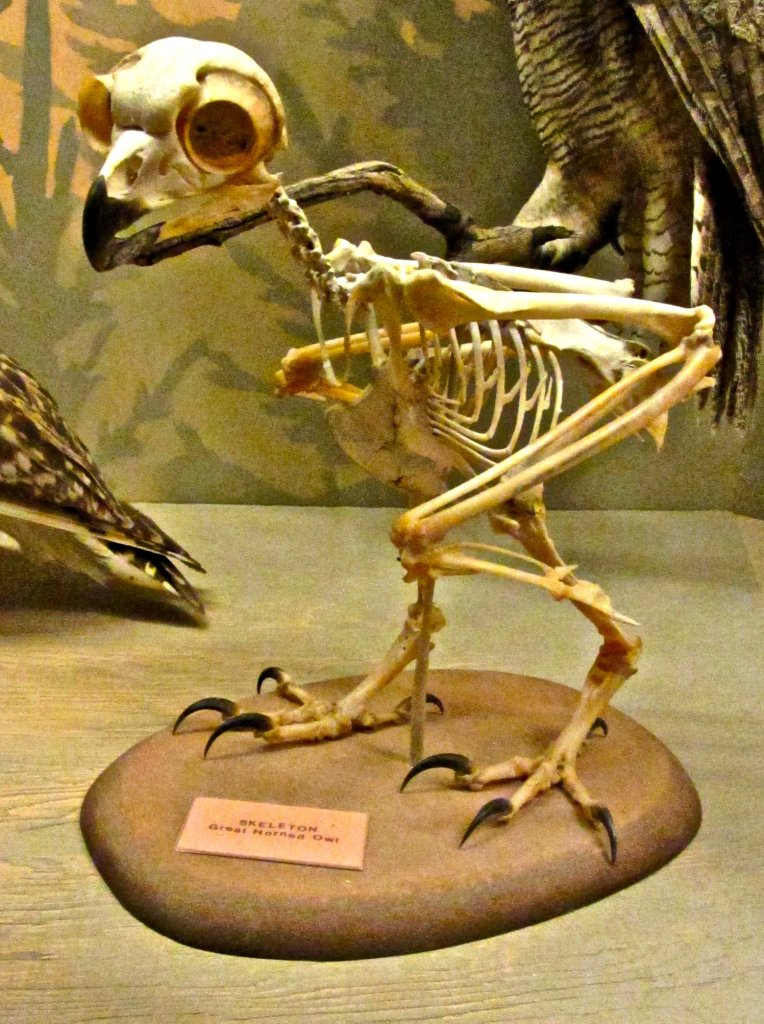
A plastic “owl” skeleton from Wilko (left) and a real great horned owl skeleton photographed by ellenm1 (right)
1. Great Horned Owl (Bubo virginianus)
At least, I think this is what this skeleton is attempting to be, judging on the literal bony “horns” on the top of the skull; in reality, the “horns” of a great horned owl are made of feathers, rather than actually having any skeletal structure behind it.
Weirdly enough, I’d argue that a real owl skeleton is plenty terrifying enough on its own without the additions made to the Halloween decoration…as much as I don’t mind working on avian skeletal remains, there is something quite off-putting about the deep, empty eye sockets that you see on display here…
Also great to see my favourite (derogatory) Halloween décor detail – when it doubt, put some phalanges on! Here, they seem to be the “feathers” of the wings, which…I mean, it’s not that too far off from reality, as birds do have phalanges at the end of the their winged forelimbs. But uh…not like that.
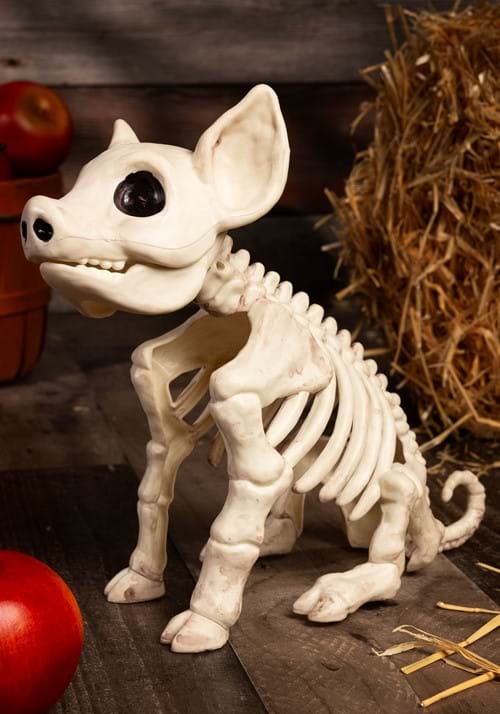

A cute(?) little baby(?) “pig” plastic skeleton from Halloween Costumes UK (left) and a real adult domestic pig skeleton from Museum of Veterinary Anatomy FMVZ USP (right)
2. Domestic Pig (Sus scrofa domesticus)
You know what, I’m starting to understand why people might prefer a cuter version of some of these skeletons. As much as I kinda love how curvy and cool any suid skull is (fun fact: I have one tattooed on my shoulder), I can see how it may not be preferable to what a living pig looks like. After all, a pig skull lacks the adorable ears and snout that we associate with the living animals.
Although the snout may not be as cute on the skull, I should mention that one of the easiest ways to identify a pig skull amongst other animal skulls is by its long, often sloped nasal bone at the front – it does actually resemble a snout, in a weird and morbid way, I guess?
The fake skeleton seems to be going for a “baby pig” type of look; however, I will admit that a skeleton can look young, so I guess they sorta got that one right? In a way. In real life, a juvenile skeleton will be mainly identified through characteristics such as unfused bones – this is prevalent in long bones, for example, where you’ll find that the ends of the bone haven’t properly fused. Similarly, parts of the skull may not be fused yet either. Depending on what bones are still unfused, you can actually figure out an approximate age at death for an animal.
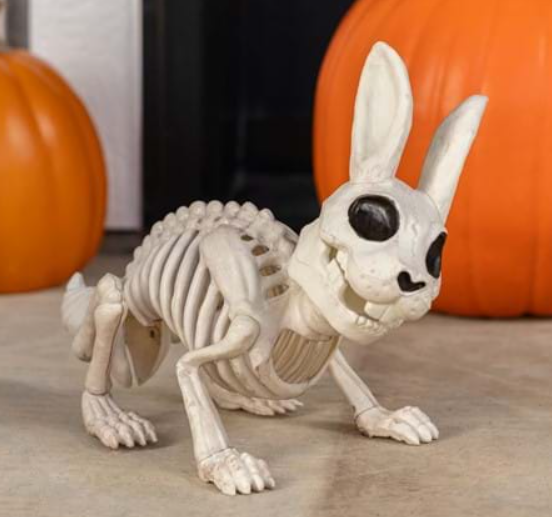
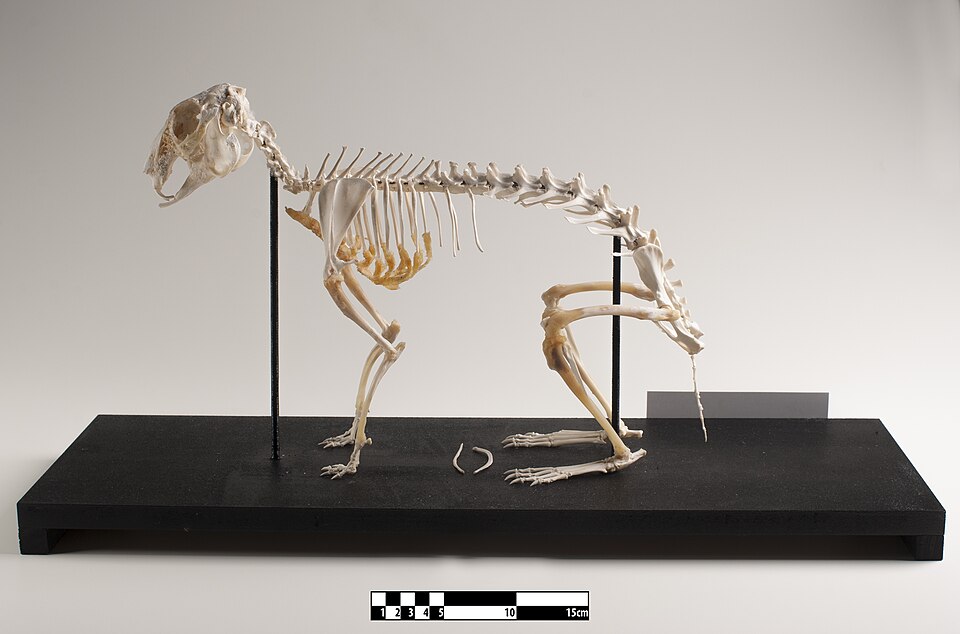
A plastic “rabbit” skeleton from Halloween Costumes UK (left) and a real European rabbit skeleton from Museum of Veterinary Anatomy FMVZ USP (right)
3. European Rabbit (Oryctolagus cuniculus)
Yet another fake skeleton that seems keen to be much cuter than the real thing! And to be fair, it’s not hard to succeed at that…while rabbits are quite cute in the flesh, their skeletons leave a lot to be desired. I find it interesting that the plastic version has moulded those cute little cheeks of a real rabbit onto its skull – not just because its clearly trying to be as cute, but it is also effectively doing what it does in real life, too, which is hide the real size of those massive incisors. Without that sagging bit of skin, you really miss out on the dental horrors that lie within (and my horror at animal teeth have been previously documented on this blog, too!).
I guess you can say that they got the eye sockets right, though. I always though there was something deeply unsettling about how deep and pronounced a lagomorph eye socket is within the skull…
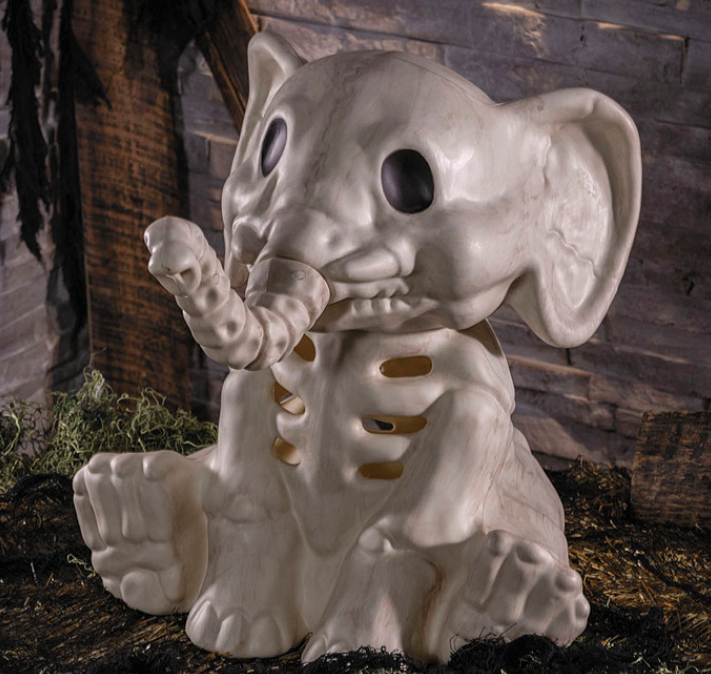
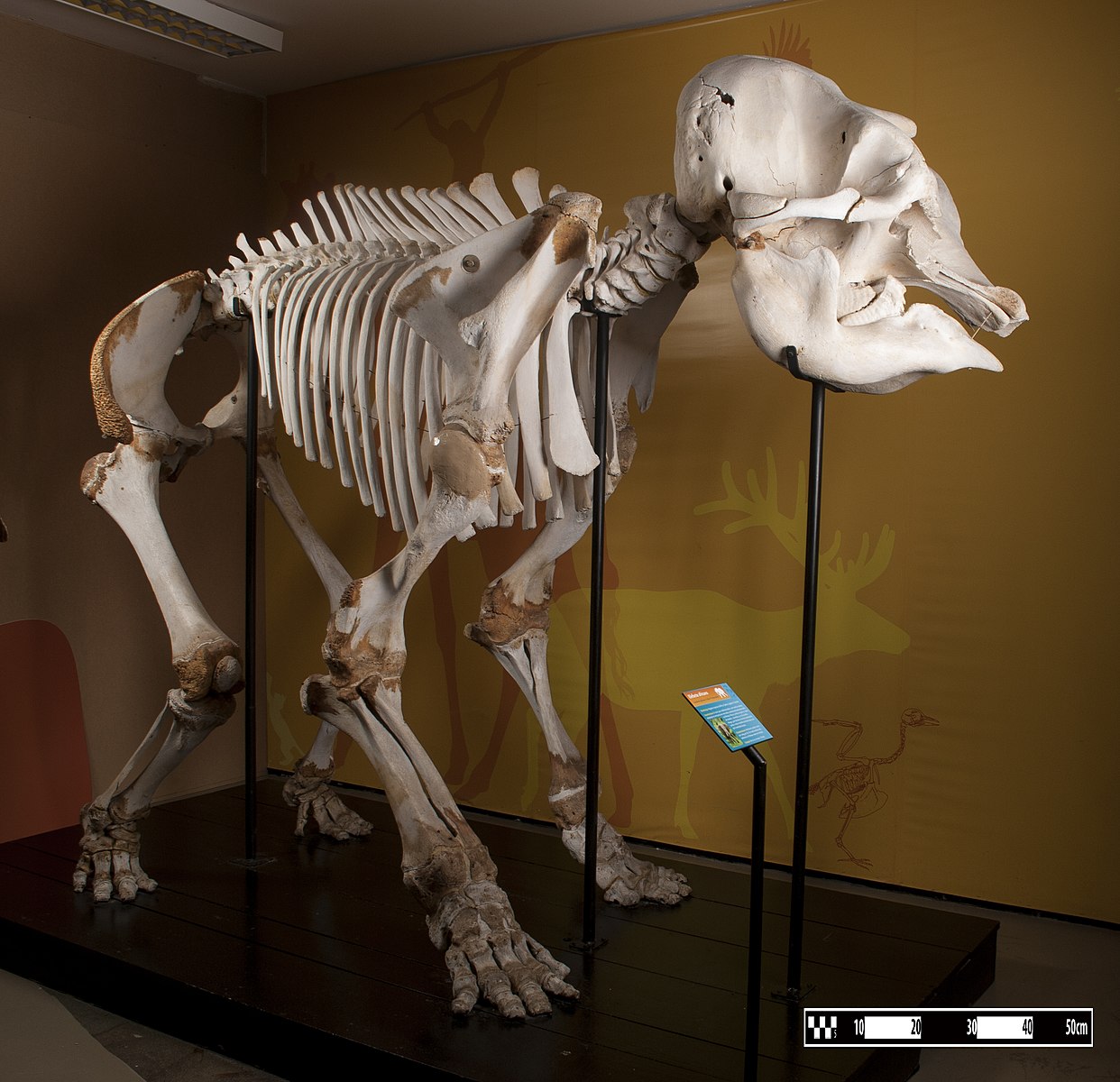
An undeniably cute plastic “elephant” skeleton from Halloween Express (left) and a real African bush elephant from Museum of Veterinary Anatomy FMVZ USP (right)
4. African Elephant (Loxodonta africana)
I guess the theme of the skeletal décor this year is that the ideal skeleton is much cuter (and more inaccurate) than the real thing. Because even I can’t argue against how cute this fake elephant skeleton is. Now, elephants aren’t necessarily part of my expertise as a zooarchaeologist who mainly works within the United Kingdom, but I think I know enough to say that trunks don’t have bones like that! In real life, elephant trunks are entirely muscle and are connected through the massive cavity that are so characteristic of elephant skulls.
Now, I’ve tried my best to identify what kind of elephant this plastic interpretation is supposed to represent – judging by the ears and the tusks, I’d say this is supposed to be a juvenile African elephant? Compared to their Asian cousins, the African elephant has more prominent tusks, a rounder head, and more distinctly shaped ears. Now, whether the plastic skeleton is supposed to specifically be an African bush elephant or an African forest elephant…that’s a bit harder to guess, especially based on a young individual (and especially one that is not remotely accurate to the real thing!). But given the tusks in the plastic version aren’t facing outward like African bush elephants, it could be that we’re dealing with a forest elephant instead.
Or maybe it’s just a bad Halloween plastic skeleton, Alex. Maybe it’s just that.

A horrific plastic “snail” skeleton from Spirit Halloween. Ugh.
5. Garden Snail (Cornu aspersum)
Absolutely not. No. I’m not even entertaining this for a minute. F*ck you. Get the hell away from me. I hope your Halloween sucks.
If you’re financially stable enough, why not donate to help out marginalised archaeologists in need via the Black Trowel Collective Microgrants? You can subscribe to their Patreon to become a monthly donor, or do a one-time donation via PayPal.
Please also consider donating to fundraisers for Palestinians currently in Gaza by clicking here.
 Animal Archaeology