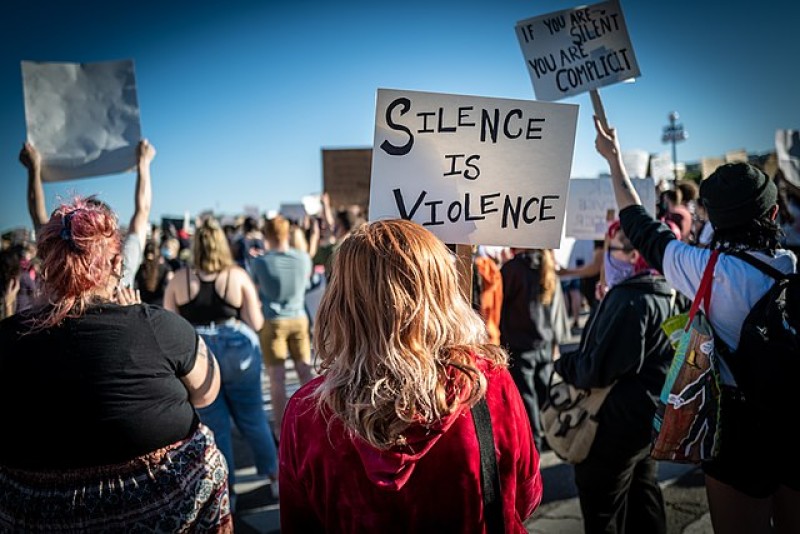
Over the past few months, I have found myself becoming increasingly frustrated with some of the rhetoric I’ve heard from white colleagues in the archaeology sector with regards to racism. Mainly, there seems to be this sense that racism is either something that occurs outside of the field – in that there are bad faith actors who weaponise and manipulate archaeology to promote racist and white supremacist pseudoarchaeology – or that it is something that happened historically – in that archaeologists worked in unethical and harmful ways in the past, but not now. Either way, I find that white archaeologists tend to externalise the issue as something that happens rarely or not as badly, when of course, that is not remotely the case. Indeed, I have heard white colleagues act surprised and shocked at the faint whispers of racism happening in the field – when for those of us who are racialised, it is far from surprising.
This inclination by white people to attempt to distance themselves from racism through reframing what their perceive as racism occurring has been broadly discussed and examined by others (see Rudnick 2021, Rabii 2022), of course. However, I find the specificity of this behaviour in a discipline like archaeology, of which much is written and discussed with regards to its past sins and complicity in colonialism and white supremacy, to be particularly insidious – it is easy to gesture at the past and say, “well, it may be bad now, but it used to be way worse“. Similarly, the online proliferation of pseudoarchaeology and fascist appropriation of archaeological research by people predominantly outside of the field provides white archaeologists with another avenue of comparison, because hey, they can’t be as bad as literal eugenicists and white supremacists, right?
But of course, whether it is intentional or not, this behaviour reframes racism within the sector as something “external” or at the very least “exceptional”; under this logic, any racism perpetrated by someone from within the field is a “particularly bad actor” and/or “an extremely rare case”. Either way, this makes the adoption of anti-racist practice within archaeology less urgent and less important than other forms of anti-oppression, as the latter can be inflicted onto white archaeologists themselves, who are the majority of the workforce (Aitchison et al. 2021). And again, while this may not be a conscious decision, it clearly has an impact within the field itself: most of those involved in ‘diversity and inclusion’ in professional spaces are white, and there are very little initiatives from major organisations or institutions that are solely focused on racism.
And yet, racism continues to thrive in the field, regardless of the acknowledgement (or lack thereof) from our white colleagues. I have experienced it on many occasions, as have many of my friends and peers, and other racialised archaeologists have explicitly published on the ways in which racism manifests directly within the sector as well (see White and Draycott 2020, Brunache et al. 2021, Flewellen et al. 2021). The failure of our white colleagues to be able to identify racism in close proximity to themselves, even in the everyday fabric of our lives as archaeologists, continues to be a massive barrier to truly adopting anti-racism on a large scale across the sector.
Along with my original blog post on the continued lack of urgency in the sector’s response to racism, I’ve previously touched on this reluctance I’ve observed among archaeologists to grapple with the ways in which the discipline is currently complicit in violence and oppression in my blog post regarding the silence of the sector on Palestine. Ultimately, I really think that white archaeologists (as well as those of us who are non-Black and non-Indigenous, as we can contribute to anti-Black and anti-Indigenous racism as well) need to really do some deep, perhaps uncomfortable self-reflection as to how and why they attempt to distance themselves from racism, and understand how this inclination is itself a form of racism as well. That these behaviours devalue the notion of racism to the point of rendering it (falsely!) non-existent in the mind of white archaeologists, yet leaving the tangible impacts of racism to run freely and rampantly to the detriment of racialised archaeologists.
The call is coming from inside the discipline, folks – will you recognise it?
References
Aitchison, K., German, P., and Rocks-Macqueen, D. (2021) Profiling the Profession 2020. Landward Research Ltd. Retrieved from https://profilingtheprofession.org.uk/
Brunache, P., Dadzie, B., Goodlett, K., Hampden, L., Khreisheh, A., Ngonadi, C., Parikh, D., and Plummer Sires, J. (2021). Contemporary Archaeology and Anti-Racism: A Manifesto from the European Society of Black and Allied Archaeologists. European Journal of Archaeology, 24(3), pp. 294-298.
Flewellen, A.O. et al. (2021). “The Future of Archaeology Is Antiracist”: Archaeology in the Time of Black Lives Matter, American Antiquity, 86(2), pp. 224–243.
Rudnick, D. L. (2021). The Least Racist White Person in the Room: Towards Critical Authenticity. In C Hayes, IM Carter, K Elderson (eds) Unhooking from Whiteness: It’s a Process, Brill, 100-108.
Rabii, W. (2022). One of the Good Ones: Rhetorical Maneuvers of Whiteness. Critical Sociology, 48(7-8), 1275-1291.
White, W. and Draycott, C. (2020) Why the Whiteness of Archaeology is a Problem. Sapiens.
Please click here to donate to fundraisers that are directly helping people currently in Gaza.
You can also donate to help out marginalised archaeologists in need via the Black Trowel Collective Microgrants. You can subscribe to their Patreon to become a monthly donor, or do a one-time donation via PayPal
 Animal Archaeology